

About Us
About the Center
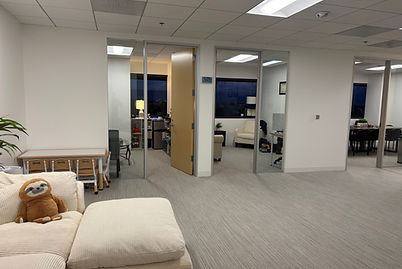
At the Center for Skills & Interventions, we strengthen the neural systems responsible for regulation, cognitive control, flexibility, and social integration. Our work is grounded in applied neuroscience and developmental psychology.
We address impairments in attention, executive control, emotional regulation, impulse modulation, stress reactivity, and social cognition — the functional domains that determine whether a person can think clearly under pressure, adapt to change, sustain effort, and relate effectively to others.
Our clients include individuals experiencing performance-based or regulatory breakdowns in academic, social, or professional settings, as well as those who are neurodiverse or have other developmental disorders.
Interventions are structured, measurable, and skill-based. Clients engage in live cognitive and social simulations designed to strengthen regulatory circuitry, increase adaptive flexibility, and recalibrate maladaptive stress responses. Progress is observed behaviorally and reinforced through repeated real-world application.
Our objective is precise: improved self-regulation, greater independence, stronger relational competence, and durable resilience across environments.

Samuel Siegel is a Neurodevelopmental Specialist with nearly a decade of experience supporting children’s social-emotional growth. He held a leadership role in Israel’s Education for Excellence program, serving neurodiverse students, and previously served as Assistant Director of Adat Shalom’s Religious School, supporting SEL, academic and developmental programming.
Samuel studied psychology at Ariel University and then Southern New Hampshire University and is currently finishing his PhD in Research & Developmental Psychology. His work integrates developmental science and applied neuroscience to help children build regulation, flexibility, and social confidence.